Most people think that when you bend a metal, it stays bent unless you force it back manually. Yet there are special metals that seem to break the rules of physics. Bend them, twist them, stretch them, and they will magically return to their original form as if nothing happened. This strange behavior is known as shape memory. It is one of the most impressive wonders in the world of materials science, making certain metals behave almost like living organisms with a memory of their past. Today, we explore why some metals have this incredible ability, how it works at the microscopic level, and the fascinating ways humans are using these magical materials.
The Mystery of Shape Memory Alloys
Shape memory is not something all metals can do. Only specific combinations of metal elements show this behavior. These special materials are called shape memory alloys. They can be made from nickel, titanium, copper, zinc, and other metals combined in precise ratios. The most famous of these alloys is nitinol, a blend of nickel and titanium known for its extraordinary flexibility and durability. The magic of shape memory comes from the unique atomic arrangement inside these alloys. When the metal is deformed, the atoms do not break or tear apart. Instead, they reversibly change their arrangement. When heated or sometimes cooled, the atoms snap back to their original structure, taking the metal with them.
The Science Behind the Magic
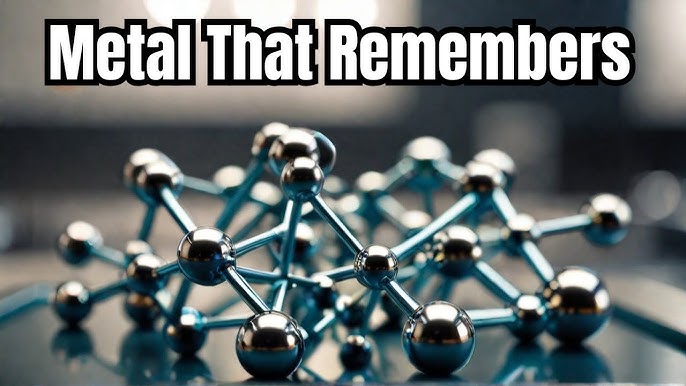
To understand shape memory, we must look deep inside the metal at the microscopic level. Metals are made of atoms arranged in patterns called crystal structures. In shape memory alloys, two different crystal structures can exist depending on temperature. These two forms are called martensite and austenite. At lower temperatures, the alloy becomes martensite, which is softer and easier to bend. When you bend the metal in this state, the crystal structure rearranges itself without breaking. When the metal is heated, it transforms back into austenite, the harder and stronger form. As this transformation happens, the atoms move into their original positions, and the metal returns to its previous shape. This reversible transformation is what gives the metal its remarkable memory.
Martensite: The Flexible Form
When shape memory alloys are cooled, they enter their martensite phase. Martensite is not like normal metal. Its atomic structure can shift and slide without causing damage. Scientists describe this movement as twinning. When you bend the metal, the twins inside the structure rotate and realign. It looks like deformation from the outside, but inside, the atoms are simply rearranging in a temporary pattern. This is why the metal can be twisted, collapsed, or stretched without losing its integrity. The martensite phase is responsible for the metal’s flexibility and its ability to take on new shapes temporarily.
Austenite: The Stable Form
When shape memory alloys heat up, they switch into their austenite phase. In this state, the crystal structure becomes more stable and rigid. Austenite has a specific arrangement that the atoms prefer. So when the temperature rises enough, the structure forces itself back into this preferred arrangement, pulling the entire metal back to its original shape. This transformation is extremely precise. The metal does not return to a similar shape. It returns to exactly the shape it was trained to hold. This is why shape memory alloys are described as having a memory. The austenite phase acts like the stored template that the metal never forgets.
Training a Metal to Remember
One of the most interesting aspects of shape memory metals is that their memory can be programmed. Manufacturers train the metal by heating it, shaping it, and cooling it under controlled conditions. This trained shape becomes the metal’s permanent memory. When you bend the alloy at low temperature, it stays deformed. But when you heat it, it instantly snaps back to the trained shape. This training process allows scientists to design metals that return to coils, springs, hooks, medical devices, or even complex 3D shapes. The training can be repeated multiple times to refine the memory, making the final shape incredibly stable.
Superelasticity: Another Strange Behavior
Shape memory alloys have another ability besides remembering their shape. They can also stretch far more than normal metals without permanent deformation. This is called superelasticity. It happens when the alloy is in its austenite phase. When force is applied, the metal temporarily transforms to martensite to absorb the stress. When the force is removed, it immediately switches back to austenite, returning to its original shape. This allows the metal to stretch like rubber and bounce back instantly, even at room temperature. Superelasticity is one of the reasons these metals are widely used in medical tools and safety devices.
Shape Memory in Medicine
The shape memory effect has transformed modern medicine. Doctors use shape memory alloys in robotically assisted surgeries, orthodontic wires, stents that open blocked arteries, and bone implants that adjust themselves inside the body. For example, a metal stent made from nitinol can be compressed into a tiny shape for easy insertion into a blood vessel. Once inside the body, the warmth triggers the metal to return to its expanded shape, opening the artery and improving blood flow. Orthodontic wires made from nitinol apply gentle, consistent pressure without the need for constant adjustments. These medical innovations save lives and reduce pain, all thanks to the remarkable memory of metals.
Applications in Everyday Technology
Shape memory materials are not limited to medicine. They are used in consumer electronics, cars, aircraft, robotics, and even eyeglass frames. Eyeglasses made with shape memory alloy frames can bend in any direction and return to their original form without breaking. In aviation, these alloys are used in engine components that adjust automatically with temperature. In robotics, memory alloys act as artificial muscles that contract when heated and relax when cooled. They can lift weights, perform delicate motions, and mimic organic movement. Even coffee makers, thermostats, and phone parts use shape memory metals to operate without complex machinery.
The Future of Smart Materials
Shape memory alloys are considered smart materials because they respond to their environment. As technology advances, scientists are creating new alloys with even more impressive abilities. Some can remember multiple shapes. Others can react to electricity instead of heat, allowing instant activation. Researchers are also developing alloys that can repair themselves if damaged, raising the possibility of self-healing metal structures. In the future, we may see shape memory metals in building materials, wearable technology, robots, and disaster response equipment.
Why Shape Memory Matters
The ability of metals to remember their shape challenges our traditional understanding of materials. It reveals that the world around us is more dynamic than we think. Materials are not just static objects. Some are alive in their own way, reacting, adapting, and returning to their previous form. Shape memory alloys show us that science is full of wonders waiting to be discovered. They bridge the gap between biology and engineering, between motion and stillness, between memory and matter.
A Material That Never Forgets
When you hold a shape memory alloy in your hand, you are holding a metal with memory. A solid piece of material that remembers its past and returns to it with precision. This astonishing behavior has changed medicine, technology, and engineering forever. It proves that even in the world of metals, there can be intelligence, adaptability, and transformation. As scientists continue to explore and improve these materials, we will uncover new layers of possibility. Shape memory metals remind us that the world is full of secrets hidden in plain sight, waiting for curious minds to explore.