Time is one of the most familiar things in our lives. We watch the clock, plan our days, and move from moment to moment without thinking twice. But what if time does not behave the same for everyone? What if time can bend, stretch, slow down, or even pass faster depending on where you are or how fast you move? This phenomenon is called time dilation, and it is one of the most astonishing wonders of modern physics. It challenges everything we think we know about time itself. In this extended post, you will discover how time dilation works, why it happens, real world experiments that prove it, and how it affects the future of technology and space exploration.
What Time Dilation Really Means
Time dilation is a change in the flow of time caused by either speed or gravity. According to Einstein’s theory of relativity, the faster you move, the slower time becomes for you. Likewise, the stronger gravity is around you, the slower time moves. This means that two people living in different conditions may experience time at different rates without realizing it. It is not science fiction. It is real, measurable, and happening every single moment.
How Einstein Discovered The Truth
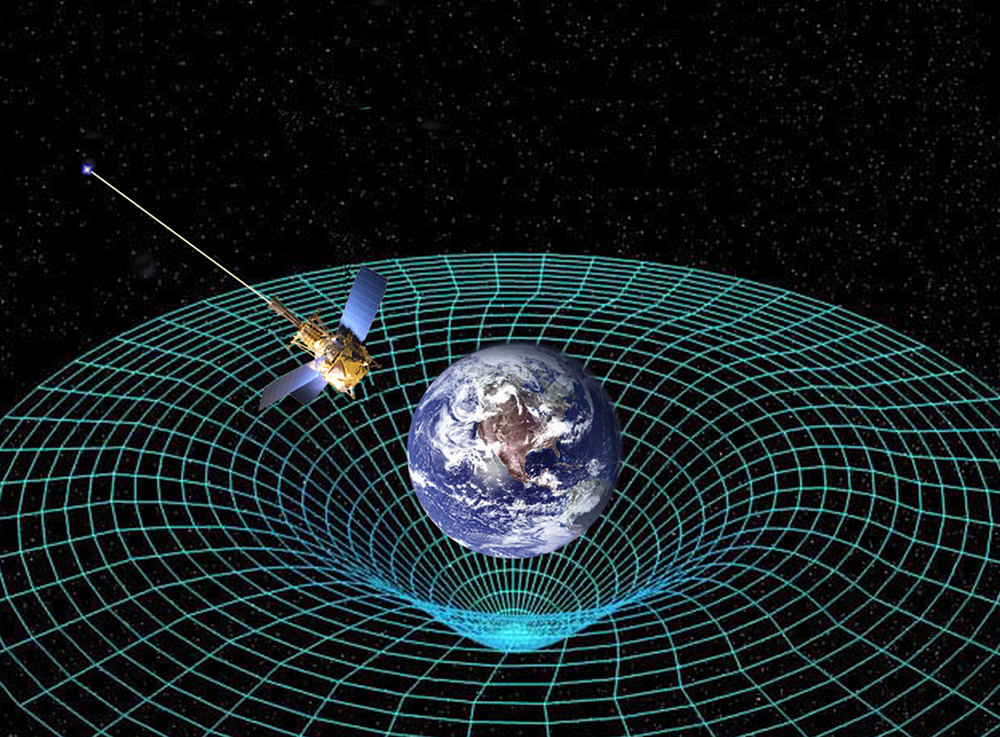
Albert Einstein introduced the idea of time dilation in his theory of special relativity. He realized that space and time are connected in a single structure called spacetime. If you change how you move through space, you also change how you move through time. This means time is not fixed. It is flexible. It can stretch or shrink depending on the motion of the observer. Later, he expanded the idea with general relativity, which showed that gravity also bends time. Heavy objects like stars, planets, and black holes cause time to slow down around them.
Real Experiments That Prove Time Dilation
Time dilation is not just theory. It has been tested, observed, and verified many times.
Atomic clock tests
Scientists placed two extremely precise atomic clocks in different conditions. One was left on Earth. The other was placed on a fast moving airplane. When the clocks were compared after the flight, they did not match. The clock on the airplane experienced slightly less time because of its speed.
GPS satellites
Every GPS satellite in space experiences time dilation. Because they are high above Earth, they feel weaker gravity, which makes their onboard clocks run faster. At the same time, because they travel at high speeds, their clocks also slow down slightly. Engineers must constantly correct these effects or GPS systems would fail within minutes.
Astronaut aging
Astronauts on the International Space Station orbit Earth at high speed. Because of this, they age ever so slightly slower than people on Earth. The difference is tiny but measurable. Over a lifetime, the effect could add up.
Why Gravity Slows Down Time
Gravity is the shape of spacetime created by mass. A massive object bends spacetime around it. This bending affects the flow of time. The closer you are to a strong gravitational source, the slower time passes for you. This means astronauts far from Earth experience time differently than people on Earth. It also means time near a black hole slows to extreme levels. A minute near the edge of a black hole could equal years on Earth.
How Speed Changes Time
According to special relativity, the faster you move, the more space and time shift for you. This creates a strange but real effect: if you move close to the speed of light, time for you slows dramatically. For example, if astronauts travel in a spaceship at near light speed for what feels like five years, decades could have passed on Earth by the time they return. This is known as the twin paradox, and it perfectly demonstrates how speed changes time.
How Time Dilation Affects Reality
Time dilation shows that the universe is far stranger than we imagine. It means there is no universal time shared by everyone. Instead, time is personal. It depends on where you are and how you move. This challenges the everyday idea of time as a simple flow from past to future. In the deeper layers of physics, time behaves like a flexible dimension that can twist and stretch under the right conditions.
The Future Technology Time Dilation Could Create
Understanding time dilation could unlock powerful technologies.
High speed space travel
If humans achieve near light speed travel, time on the spaceship will pass much slower. This could allow explorers to travel far into the future or reach distant planets while much more time passes on Earth.
Ultra precise clocks
Time dilation research leads to better atomic clocks used in navigation, scientific measurements, and communication systems.
Gravity based sensors
By measuring tiny changes in time caused by gravity, scientists can build sensors that detect underground structures, earthquakes, and even changes in Earth’s shape.
Why Time Dilation Matters
Time dilation is one of the greatest scientific wonders ever discovered. It reveals that time is not the simple ticking we experience daily. It is a flexible, dynamic dimension intertwined with the structure of the universe. Understanding it helps us build better technology, explore space, and uncover the hidden rules of reality. Most importantly, it reminds us that the universe is full of mysteries we are only beginning to understand.
The Mystery That Still Remains
Even though we know time dilation is real, we still do not fully understand what time truly is. Why does time flow? Why does it change under different conditions? Why does the universe obey these rules? Time dilation answers many questions but also opens new ones, pushing us deeper into the wonder of the cosmos.