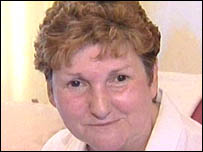
In the small quiet town of Newcastle in the United Kingdom a woman named Linda Walker would one day wake up and find that her own voice no longer belonged to her. Her life was ordinary before the event she worked attended church spent time with her family and spoke like any other British woman born and raised in the region. But when a sudden stroke struck her in her home everything changed. The woman who had spoken with a familiar Newcastle accent her entire life opened her mouth after the stroke and heard something entirely different. Her voice sounded foreign distant and unrecognizable even to herself. What happened to her would become one of the most fascinating and widely discussed medical mysteries known as Foreign Accent Syndrome.
Foreign Accent Syndrome is a rare neurological condition but its effects are so dramatic that cases of it often go viral around the world. People who experience it suddenly begin speaking in a way that makes them sound like they are from a different country or region even though they have never lived there or spoken in that accent before. For Linda her new voice sounded Eastern European and sometimes even French according to those who heard her. Her speech was altered by the stroke in subtle but powerful ways that changed the rhythm intonation and patterns of her sentences. When she spoke people who met her for the first time assumed she was a foreigner and long time friends struggled to adjust to her transformed voice.
Before the stroke Linda enjoyed a normal life. She had never been trained in foreign languages apart from basic school lessons and she had never traveled to regions where people spoke with the accent she suddenly developed. Her doctors were baffled. After the stroke she began speech therapy and rehabilitation to regain her strength but every day she woke up with a voice that reminded her of the incident that almost took her life. The sensation of hearing her own voice sounding like that of a stranger was emotional and unsettling. She described the experience as living inside another person’s body because even day to day conversations felt foreign and strange.
Foreign Accent Syndrome is extremely rare with only a few hundred documented cases worldwide. Scientists believe that it occurs when the area of the brain responsible for coordinating speech is damaged by trauma stroke or severe migraines. Instead of losing the ability to speak entirely the brain reorganizes the speech patterns in unusual ways. The result can sound like a new accent or even a new language to listeners. In Linda’s case the stroke affected the left side of her brain which plays a key role in forming language and speech. Her vocal cords were fine her understanding of language was intact but the rhythm and patterns of her speech shifted dramatically making her sound like someone from hundreds of miles away.
Media outlets quickly discovered her story. Reporters from across the United Kingdom and beyond interviewed her wanting to capture the strange and shocking reality of waking up with a different voice. Videos of Linda speaking drew millions of views online. People were fascinated by how clearly her accent resembled that of a foreign speaker. Many viewers at first believed it was a prank or a deliberate imitation until doctors confirmed the authenticity of her condition. Her story spread across social media platforms and sparked conversations about how fragile and mysterious the human brain can be.
Living with her new accent was not easy. Linda faced moments of embarrassment and misunderstanding. Strangers asked where she was from even though she had spent her entire life in Newcastle. Family members sometimes did a double take when she spoke because though they recognized her words they did not recognize the sound of them. Linda explained that the hardest part was feeling disconnected from her identity. A voice is deeply personal and hearing a voice that did not match her memories of herself made daily life emotionally challenging. She often felt like she was living in a shadow of her former self.
However Linda was not alone. Other people around the world had experienced similar transformations. A woman in the United States developed a British accent after a severe headache. A woman in Australia woke up speaking with an Irish accent after surgery. A Norwegian woman injured during World War Two famously began speaking as though she were German a transformation that caused serious social problems for her during the tense political climate of the time. Linda began reading about these cases and found comfort in knowing that her experience though rare was not completely isolated.
Doctors continued to study her condition hoping to learn more from her case. They performed brain scans recorded her speech patterns and documented her progress during therapy sessions. In some cases people with Foreign Accent Syndrome eventually regain their original voice but in others the changes become permanent. As time passed Linda’s accent softened but never fully returned to her original Newcastle sound. She learned to accept that her new voice was part of her story a reminder of both her survival and the remarkable power of the brain to heal in unexpected ways.
Her journey also inspired scientific discussions about how the brain organizes speech. Linguists and neurologists studied her recordings to understand how small disruptions in the brain can alter the structure of sentences and the melody of speech. Linda attended conferences and participated in research studies allowing experts to analyze her speech patterns. Through her cooperation researchers gained valuable insight into the condition and the human capacity for adaptation.
Despite the challenges Linda maintained her sense of humor and resilience. She often joked that she had become an accidental traveler without ever leaving her homeland. Friends teased her gently and over time the people close to her adjusted to her new voice. She continued therapy and focused on rebuilding her life after the stroke. The incident reminded her of the unpredictability of life and the importance of valuing every moment no matter how strange it may become.
Her story continues to spread across the internet inspiring awe and curiosity. People still search for her interviews watch videos of her speaking and share her experience as an example of the incredible mysteries of the brain. Foreign Accent Syndrome remains rare but Linda’s case is one of the most documented and widely recognized examples. It challenges the way people think about identity language and the connection between the mind and the voice that carries our thoughts into the world.
In conclusion the story of Linda Walker the woman who woke up speaking in a different accent reminds us of how fragile and powerful the human brain can be. A moment of trauma transformed her voice but it did not silence her. She adapted learned to understand her new reality and allowed her story to help others understand a condition that remains one of the most fascinating medical mysteries. Her experience continues to capture the imagination of people around the world because it raises a haunting question that many have never considered. What would you do if you woke up one day and the voice coming out of your mouth no longer sounded like you at all?