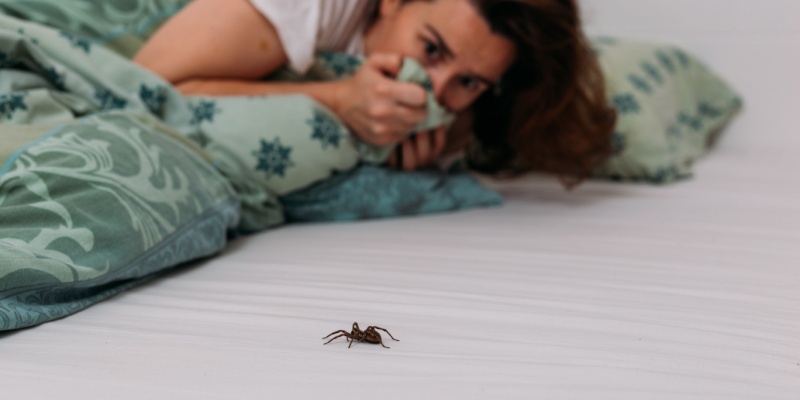
One of the most persistent and unsettling myths in popular culture is the claim that humans swallow an average of eight spiders every year while sleeping. You have probably heard this frightening statement at some point, whether from friends, social media, or even in casual conversation. The idea is enough to make anyone check under their pillow or jump out of bed in panic. But is there any truth to this claim, or is it simply another science myth that has taken on a life of its own? The answer is far from what most people expect and sheds light on how myths about science can spread and persist.
The origin of the idea that people swallow spiders while sleeping is murky. Researchers have not identified a specific source, but some believe it may have started as a cautionary tale or as part of an effort to evoke fear in children. Others suggest it may have begun as a piece of misinformation that gained traction because it is memorable and shocking. Whatever the origin, the claim spread quickly across newspapers, books, and later the internet. The notion that something so small and seemingly harmless could infiltrate our bodies without our knowledge made the story both creepy and believable. Humans are naturally wary of insects, and the thought of spiders crawling into our mouths while we sleep is inherently disturbing, which helped the myth embed itself in popular culture.
Science and common sense, however, tell a different story. Spiders are generally not inclined to crawl into human mouths. Most species are nocturnal hunters that avoid humans whenever possible. A sleeping human is a large, potentially dangerous, and warm object that spiders do not seek out as a habitat or food source. The conditions necessary for a spider to deliberately enter a mouth during sleep are extremely unlikely. People move in their sleep, breathe, and generate vibrations that would discourage a spider from approaching. In addition, the human mouth is not a welcoming environment. Saliva, teeth, and the act of swallowing or coughing make it very difficult for a spider to survive such an encounter.
In 1993, a magazine article contributed significantly to the spread of this myth. The author presented the claim as fact without citing any research or evidence. This lack of verification did not prevent the story from being widely circulated. The article was picked up by other publications and repeated in classrooms and trivia games, further solidifying the myth in the public imagination. Over time, it became accepted as common knowledge, even though no scientific study has ever confirmed that people routinely swallow spiders in their sleep.
In reality, there is no documented case of an average person swallowing multiple spiders each year while sleeping. Entomologists and arachnologists have repeatedly stated that such behavior is extremely improbable. Spiders are much more likely to avoid humans altogether. They prefer dark corners, crevices, and areas where they can build webs or hunt insects. The human bed is rarely an attractive environment, as it lacks the food sources that spiders typically seek and is often disturbed by movement. The myth persists because it plays on fear and imagination, not because it is based on empirical evidence.
The spread of this myth also illustrates how misinformation can become entrenched. People tend to share stories that evoke strong emotions, and a tale involving spiders, sleep, and the potential for unintentional ingestion hits all the right notes. Once repeated, the story gains credibility simply through repetition, even without scientific backing. This phenomenon demonstrates the importance of critical thinking and the need to question sensational claims, especially those related to science.
Despite its falsity, the myth has inspired curiosity and research. Some scientists have even conducted informal experiments to explore whether a spider can enter a human’s mouth during sleep. Volunteers slept in controlled environments while spiders were introduced, and in every case, the spiders avoided the sleeping humans. The studies, though limited in scope, support the conclusion that swallowing spiders in sleep is extremely unlikely. Spiders do not intentionally enter mouths, and the chances of accidental ingestion are minimal.
The persistence of this myth also reflects human psychology. We are drawn to stories that evoke fear, disgust, or surprise. A spider crawling into our mouths while we sleep fits all three criteria. The image is vivid and memorable, making it easy to recall and repeat. It also allows people to bond over shared fears, retelling the story as a cautionary or entertaining tale. In many ways, the myth serves a social function, reinforcing cultural attitudes toward insects and highlighting our fascination with the unknown.
In practical terms, people do not need to worry about swallowing spiders in their sleep. Normal hygiene and standard pest control measures are sufficient to maintain a spider-free sleeping environment. Keeping bedrooms clean, reducing clutter, sealing cracks and gaps, and using screens on windows will prevent spiders from entering living spaces. There is no need for extreme measures or panic. The myth is a story that captivates the imagination but has no basis in actual risk.
Understanding why this myth persists can also help prevent other misconceptions from spreading. Myths about science, whether related to spiders, lightning, or the human brain, often gain traction because they are simple, memorable, and emotionally engaging. They bypass critical thinking and rely on storytelling. By questioning these claims and seeking evidence, we can separate fact from fiction and appreciate the world as it truly is.
In addition to dispelling fear, learning the truth about this myth is empowering. It highlights how science can challenge assumptions and reveal the reality behind popular beliefs. People gain a clearer understanding of animal behavior, human physiology, and how misinformation spreads. Knowing that spiders are unlikely to invade your mouth while sleeping allows you to appreciate these creatures for their ecological role rather than fearing them unnecessarily. Spiders are valuable for controlling insect populations, and recognizing their true behavior can foster respect rather than fear.
The myth that humans swallow eight spiders a year in sleep is not only false but also demonstrates how easily misinformation can become accepted as truth. It has no foundation in scientific evidence, defies common sense, and has been debunked by experts in entomology and biology. Yet it continues to circulate because it is memorable, frightening, and sensational. Understanding the story behind the myth and the reasons for its persistence allows people to see how myths shape our perception of the natural world.
The next time someone tells you that humans swallow multiple spiders each year in their sleep, you can confidently explain that it is a science myth. Spiders avoid humans; the conditions necessary for such an event are improbable, and there is no documented evidence supporting the claim. Appreciating the truth not only relieves unnecessary fear but also illustrates the importance of skepticism, research, and critical thinking when evaluating sensational statements about the natural world.