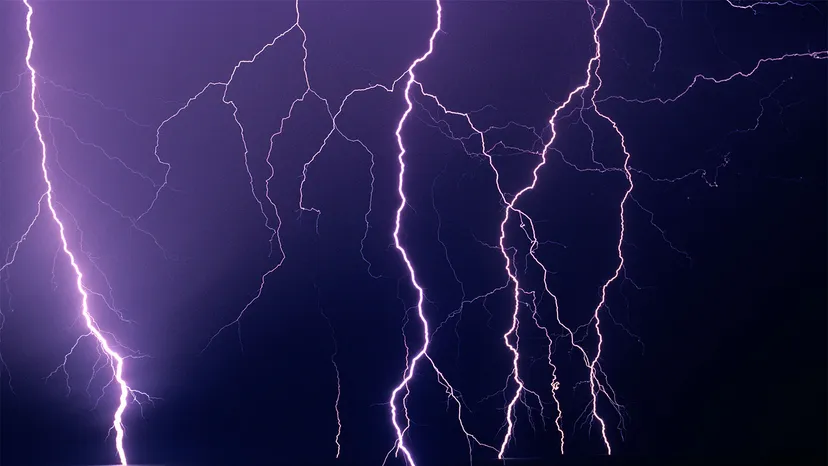
Lightning has fascinated and terrified humans for centuries. From ancient myths to modern science, it has always held a special place in human imagination. One of the most common sayings about lightning is that it never strikes the same place twice. You have probably heard it many times in movies, books, or casual conversations. It is often used metaphorically to suggest that something unlikely will not happen again. But does this adage hold any truth, or is it just another science myth? The answer may surprise you and is far more complex than a simple yes or no.
The origin of the idea that lightning does not strike the same place twice is unclear. Some historians suggest it came from early observations of lightning patterns during thunderstorms. People noticed that lightning seemed to hit many different places and rarely returned to the same spot during a single storm. Over time, this observation was simplified into the rule that it never strikes the same place twice. It became part of everyday language and entered popular culture as a metaphor for rare events. While it makes for a catchy phrase, it does not reflect reality. Lightning is a natural electrical phenomenon that follows the laws of physics, not superstition.
Modern science has shown that lightning can and often does strike the same place multiple times. Tall structures, open fields, and isolated objects are more likely to be struck repeatedly. For example, the Empire State Building in New York City is hit by lightning an average of twenty to twenty-five times per year. The structure’s height and metal framework make it a natural target for electrical discharges. Similarly, radio towers, wind turbines, and skyscrapers experience repeated strikes during thunderstorms. These examples clearly contradict the old myth and demonstrate that lightning has no memory or preference; it is purely guided by electrical potential and path of least resistance.
Lightning occurs when there is a build-up of electrical charges in clouds or between clouds and the ground. When the difference in charge becomes large enough, a sudden discharge of electricity occurs. This discharge seeks the shortest and easiest path to equalize the charges. Factors such as height, conductivity, and isolation influence where lightning strikes. A tall tree in an open field or a metal pole on a hill is far more likely to be hit repeatedly than a small shrub surrounded by other trees. In other words, the physical environment plays a crucial role in determining where lightning will strike, not luck or chance.
Many people also assume that lightning strikes are always destructive or deadly. While lightning is extremely powerful and can reach temperatures of around thirty thousand degrees Celsius, not all strikes cause damage. Buildings and towers often have lightning rods or other protection systems that safely channel the electricity into the ground. Trees, however, can be split or catch fire when struck. People caught in open areas without protection face the highest risk. The reality of repeated strikes makes safety precautions even more important, especially in areas prone to thunderstorms.
The myth that lightning never strikes the same place twice may persist because of human perception. People remember dramatic events and create narratives around them. If lightning strikes a house once and causes damage, it is often assumed that it will not happen again. When a second strike occurs, it may be dismissed as a rare exception. These biases reinforce the myth even when evidence points to the contrary. Education and awareness about the science behind lightning are essential to dispel such misconceptions and encourage proper safety measures.
Lightning can also take unusual forms that add to the mystery. For instance, ball lightning is a rare phenomenon that appears as glowing spheres during thunderstorms. While the exact mechanism behind ball lightning is not fully understood, it is another example of how lightning defies simplistic explanations. Additionally, cloud-to-cloud and intra-cloud lightning are common but less visible, making people think lightning is more random than it actually is. Understanding these different types helps explain why the myth arose and why it continues to persist.
Historical examples further show that repeated strikes are common. In 2012, the Willis Tower in Chicago, one of the tallest buildings in the United States, was struck by lightning multiple times during a single storm. Each strike followed a similar path, targeting the highest and most conductive parts of the building. These incidents illustrate the predictable nature of lightning and debunk the idea that it avoids places it has already hit. Scientific observations consistently confirm that structures with certain characteristics will experience multiple strikes over time.
The persistence of the myth also reflects a human desire for patterns and explanations. People want to believe that rare events are one-time occurrences and that danger is avoidable if it has already happened once. In reality, natural phenomena like lightning operate according to physics, not probability as humans perceive it. Lightning does not have memory, intention, or knowledge of past strikes. Its path is determined by electrical charges, atmospheric conditions, and the physical environment. Accepting this reality is essential for both safety and understanding the natural world.
In everyday life, it is important to recognize that repeated lightning strikes are not unusual. People living near tall structures, open fields, or metal towers should take precautions during thunderstorms. Lightning rods, surge protectors, and avoidance of outdoor exposure are practical measures to minimize risk. Educating communities about the science of lightning can save lives and prevent damage. Misunderstanding the nature of lightning, based on myths, can lead to complacency and dangerous situations.
The scientific truth about lightning also provides fascinating insights into the natural world. Lightning helps balance electrical charges in the atmosphere, contributes to nitrogen fixation, and even influences weather patterns. Its power is both destructive and vital. Understanding how and why lightning strikes certain places repeatedly allows scientists to predict risks, design safer buildings, and study the atmosphere more effectively. Dispelling myths about lightning does not diminish its wonder; it enhances our appreciation for its complexity and the laws of nature that govern it.
The phrase that lightning never strikes the same place twice is appealing because it simplifies the unpredictable into an understandable narrative. However, it fails to reflect reality. Lightning follows the principles of physics, not human logic or superstition. Tall, conductive, and isolated objects are natural targets, and multiple strikes are a normal part of thunderstorms. Recognizing this fact can improve safety, inform science, and help people better understand the power and behavior of one of nature’s most dramatic forces.
Next time a storm rolls in, remember that lightning does not follow fairy tales or old sayings. It is a powerful natural phenomenon governed by electricity and atmospheric conditions. Respecting its power, learning the science, and taking proper precautions are the best ways to stay safe. Repeated strikes are not exceptions but expected behavior for tall or conductive structures. The myth may persist in conversation, but science tells the real story. Lightning can and often does strike the same place more than once.