Nature has a way of surprising humans in ways we never expect, but few natural events strike the eye—and the imagination—quite like a lake turning blood red overnight. Picture this: a peaceful village settling into its evening quiet, a lake sitting still like a mirror under the fading sun, everything calm and predictable. Then by morning, the same lake has turned a shocking, vivid red, as if someone poured thousands of gallons of dye into it. Panic rises, rumors spread, villagers gather, and the world takes notice. Events like this don’t just stay local—they go viral, and for good reason. A lake turning blood-red isn’t something people forget easily. Even more fascinating? It has happened in multiple parts of the world, each event carrying its own blend of fear, science, wonder, and unanswered questions. This is the true story behind the overnight blood-red lake phenomenon.
The Morning Shock That Stuns a Village
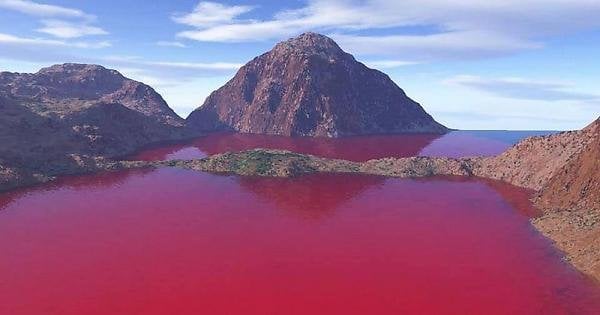
In one described event, villagers living near a quiet lake opened their doors on an ordinary morning expecting to see calm blue water reflecting the rising sun. Instead, they saw what looked like a massive pool of blood. The lake was completely red. Not pink, not rust-colored, but an intense crimson. People rushed to the banks, calling relatives, pointing with wide eyes, and gathering in clusters. Some believed it was a sign—a warning, an omen, something supernatural. Others feared pollution, poison, or a dangerous spill. No one had seen anything unusual the night before. No trucks, no dumping, no unusual activity. The transformation had simply happened while everyone slept. Within hours, photos flooded social media, and the story spread across news platforms and WhatsApp groups. Scientists were called to investigate, but by then, theories had already taken over the internet.
First Theories: Poison, Pollution, or Something Worse?
The immediate reaction in most communities is fear. Water turning red seems like something out of a plague story, and people naturally assume danger. Many villagers believed chemicals might have leaked into the lake overnight. Some suspected a nearby factory, while others feared a burst pipeline or a secret dumping operation. Environmental officers often rush in quickly when a lake suddenly changes color—especially red—because certain industrial chemicals can create dramatic color shifts. However, in many cases, investigations reveal something surprising: no dangerous chemical contamination, no toxic waste, and no human interference. The water often remains safe to touch and observe, though not always safe to drink. So if chemicals weren’t to blame, what caused the sudden transformation?
Algae: A Tiny Organism With a Dramatic Effect
In many cases around the world, the culprit behind blood-red water is something incredibly small: red algae, scientifically known as Dunaliella salina. This micro-organism thrives in very salty water and produces a red pigment called beta-carotene when stressed. When conditions shift rapidly—changes in temperature, sunlight levels, or water composition—the algae multiply quickly and release large amounts of this red pigment. By morning, the lake can look dramatically different. One of the most famous examples is Lake Urmia in Iran, which has turned red multiple times due to algae blooms triggered by evaporation and rising salinity.
The strange part? The lake can return to normal just as quickly, sometimes within a week, once conditions stabilize. This sudden shift from blue to red and back to blue makes the event feel supernatural to many locals—and even to scientists witnessing the change in real time.
Minerals and Iron: The Earth’s Hidden Pigments
Another cause behind blood-red lakes comes from deep within the earth. Some lakes naturally contain high levels of iron-rich sediments. When the water level suddenly drops or mineral sediments get disturbed, the iron oxidizes, turning the lake bright red. Think of it like rust forming instantly across the entire surface. In hot climates, where lakes dry up partially overnight due to sudden temperature drops or intense evaporation, exposed minerals can create a dramatic red hue. This was the explanation behind the red transformation of parts of the Dead Sea shoreline. When scientists arrived, they found that mineral concentrations had shifted so quickly that the lake seemed to change color overnight.
Microbial Blooms: Life That Paints the Water
Certain bacteria can also produce pigments that tint large bodies of water. Some thrive in low-oxygen environments and release reddish compounds when they multiply. These bacteria don’t always pose a threat, but they create visually stunning and unsettling scenes. Imagine a layer of red bacteria floating across the water like a thin film. When sunlight hits the surface just right, the entire lake can appear blood-red, especially early in the morning when the water is still.
Human Imagination Fills the Gaps
While science often gives clear explanations, people rarely stop at the first answer. Viral stories come alive because humans love mystery. When villagers see a lake turn red, especially overnight, the imagination takes over. Some believe it’s a sign of approaching disaster. Others link it to local myths about spirits or ancient curses. A few even suggest extraterrestrial involvement. In remote communities without much scientific access, these explanations spread quickly and become part of the local folklore. Even online, comments often drift toward speculation—“Was it natural?” “Is the government hiding something?” “Is it a sign?” These reactions add to the event’s virality, giving the story more momentum with each retelling.
The Global Pattern: This Isn’t an Isolated Phenomenon
What makes the blood-red lake story especially fascinating is how frequently it occurs around the world. Examples include:
A lake in India that turned red so suddenly that villagers feared the end of days.
A saltwater pond in Tunisia that transformed overnight, drawing crowds of tourists within hours.
Sections of the Dead Sea shoreline shifting to bright red due to mineral reactions.
Lake Burlinskoye in Russia changing color during hot summers.
Seasonal color shifts in lakes in Iran, Australia, and even parts of Canada.
These events happen in different environments and cultures, but the reaction is always the same: shock, curiosity, fear, and wonder.
Why the Overnight Transformation Happens
A key part of the mystery is the speed. How does a lake turn red in just a few hours? The answer lies in environmental tipping points. When the temperature rises or drops quickly, when salinity changes suddenly, or when sediments shift during the night, organisms and minerals react instantly. Algae reproduce in bursts. Minerals oxidize rapidly. Microbial layers rearrange. Nature doesn’t always move slowly; sometimes it changes faster than humans expect or notice.
Conclusion: A Beautiful Mystery of Nature
The overnight blood-red lake phenomenon is one of nature’s greatest visual surprises. It blends fear, beauty, science, and mystery into a single unforgettable sight. While the explanations vary—from algae blooms to mineral shifts—one thing is certain: a lake turning red overnight will always capture the world’s attention. These rare events remind us that the planet is full of dramatic changes happening quietly and quickly, just beyond our view.