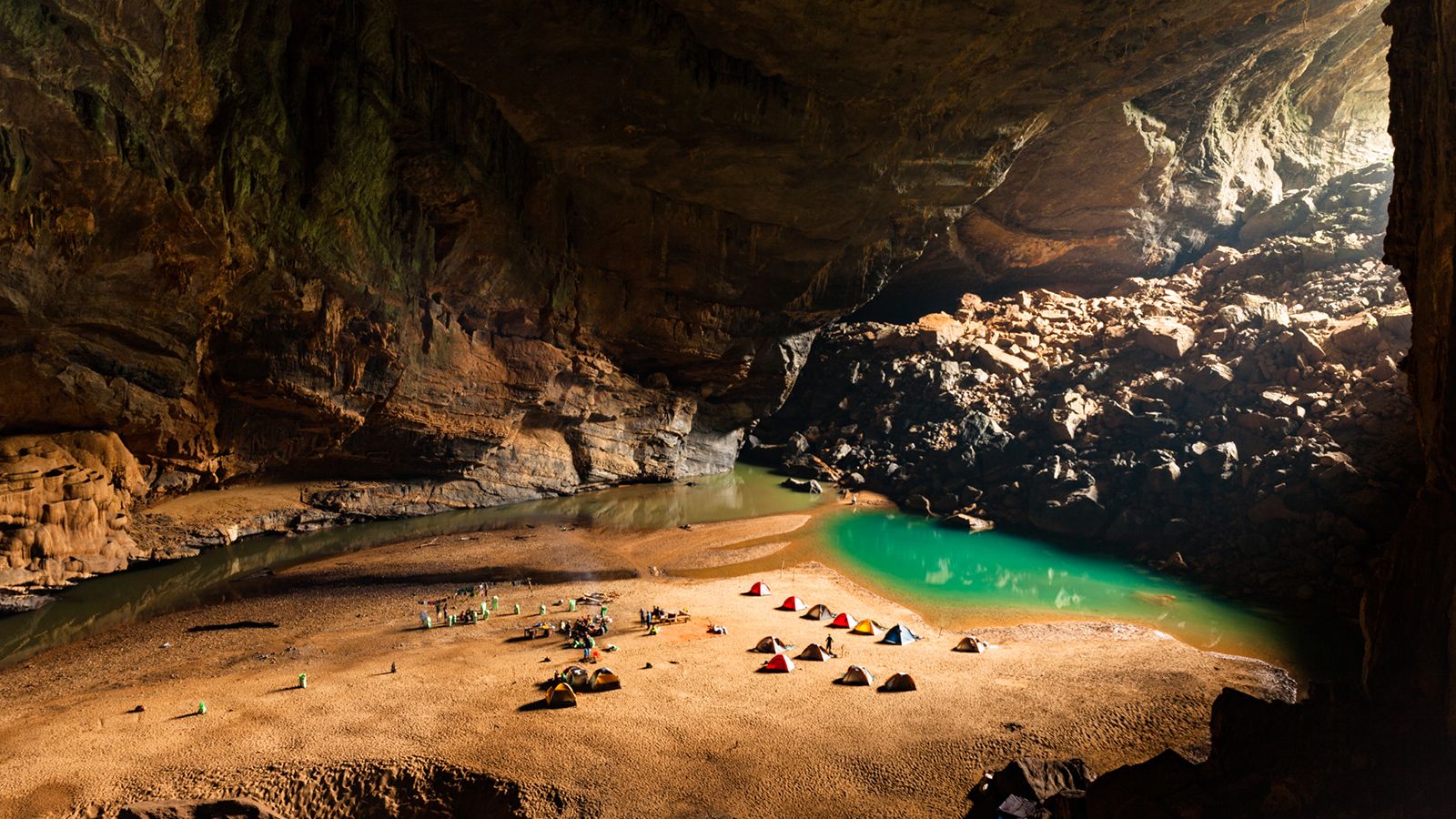
Deep in the mountains of Phong Nha-Ke Bang National Park in Vietnam lies a natural wonder so immense it defies imagination. Son Doong Cave, discovered in the early 1990s and explored more extensively in the 2000s, holds the title of the largest cave in the world. With massive chambers, underground rivers, and its own localized climate, Son Doong is a subterranean world unlike any other. In this post, we explore the cave’s unique features, history, and the breathtaking experiences it offers to those lucky enough to enter its colossal depths.
Discovery and Exploration
Although known to locals for centuries, Son Doong remained largely uncharted until British caver Howard Limbert led an expedition in 2009. Initial reports underestimated its scale, but later measurements revealed chambers over 200 meters high and 150 meters wide. The cave stretches more than five kilometers, making it vast enough to house a 40-story skyscraper inside. Exploration requires careful planning, permits, and experienced guides, as the cave’s ecosystem is delicate and the terrain challenging.
Cave Chambers: Giants of Stone
Son Doong’s chambers are mind-boggling in scale. The main passage contains enormous stalagmites and stalactites, some reaching tens of meters in height. Limestone formations have been sculpted over millions of years by flowing water, wind, and geological shifts, creating surreal shapes and textures. The sheer size of the chambers allows for clouds and fog to form within, giving parts of the cave a mystical, almost otherworldly atmosphere.
The Underground River: Life Flowing in Darkness
An underground river runs through Son Doong, fed by rainfall from above. Its clear, cool waters carve passageways and create subterranean pools that sustain unique species of fish, insects, and other invertebrates. This hidden waterway also plays a crucial role in the cave’s climate, maintaining humidity and temperature levels that differ dramatically from the outside world. Visitors often describe the sound of the river as echoing like music through the immense chambers.
Unique Ecosystems: A World Apart
Son Doong hosts an isolated ecosystem that has evolved independently for thousands of years. Certain plant species grow near skylights where sunlight penetrates, creating patches of greenery inside the cave. Rare insects and cave-adapted animals have been documented, showcasing evolution in isolation. Scientists continue to study this ecosystem, revealing insights into how life can adapt to extreme and secluded environments.
Skylights and Climate Phenomena
Large collapses in the cave’s ceiling, known as dolines, allow sunlight to reach the cavern floor. These openings create microclimates where mist, fog, and even small forests can exist underground. The contrast between sunlit areas and shadowed zones produces dramatic lighting effects that enhance the cave’s surreal beauty. The cave’s own weather system, including clouds forming within chambers, is a phenomenon rarely observed anywhere else on Earth.
Adventure Tourism: Experiencing Son Doong
For those seeking adventure, Son Doong offers a once-in-a-lifetime experience. Permits are limited to protect the cave, and expeditions typically last several days, including hiking, camping, and caving. Trekkers navigate rugged terrain, underground rivers, and massive chambers while guided by experts. The combination of challenge and awe-inspiring scenery has made Son Doong a bucket-list destination for adventure travelers worldwide.
Scientific Importance and Preservation
Son Doong is more than a tourist attraction; it is a natural laboratory. Geologists study its limestone formations to understand Earth’s history, while biologists examine its unique ecosystems to learn about evolution in isolation. Conservation is critical, as human activity can disrupt delicate formations and ecosystems. National park authorities and international organizations work together to ensure the cave remains pristine for future generations.
Cultural Significance and Local Impact
The discovery and exploration of Son Doong have brought attention and economic opportunities to local communities. Guides, porters, and hospitality services benefit from regulated tourism. Additionally, the cave has inspired local legends and stories, blending natural wonder with cultural heritage. Preserving both the cave and the surrounding community’s traditions remains a priority for sustainable development.
Conclusion: Standing in Awe of Earth’s Largest Cave
Son Doong Cave is a testament to nature’s ability to create worlds beyond imagination. Its massive chambers, underground rivers, unique ecosystems, and skylights offer a glimpse into a hidden planet beneath our feet. Visiting or even learning about Son Doong inspires respect, wonder, and a deep appreciation for the Earth’s geological and biological marvels. It is a reminder that some of the greatest wonders are still waiting to be discovered, hidden from everyday view.